On October 14 I paid $591 for a "Best of Lynchburg, Marketing" award. It was based on 9 or 10 Google reviews. In the weeks since, the award has started showing up in AI answers about my business. It hasn't brought in a lead.
Why I bought it
On October 13 a cold email told me "Base Hit Marketing qualifies for business of the year 2026." It pointed me to awardy.us, and a follow-up pitched an "AI boosting press release" to go with it.

My clients get these same emails, and they ask me whether any of it is worth the money. I wanted real data to answer them, so I bought what was being pitched and started tracking it.
This is Part One of a series. Each part covers one purchase, and the last part covers the results across all of them.
What $591 bought
I bought Awardy.US's Ultimate Awards Package. It included the Consumer Ratings Institute award, a physical trophy and a press release on EIN Presswire with a "USA Today Network Boost." I didn't change a word of what the vendor wrote.
The release and the sales pitches
The release went live on EIN Presswire at 12:06 PM Eastern on October 16, under the headline "Base Hit Marketing Named Best of Lynchburg, Marketing." The byline was Awardy.US, not me.
The first sales pitch arrived at 12:37, 31 minutes after publication. By October 22 I had 10 pitches, priced from free to $2,000. CIO Bulletin offered an "Innovators of the Year" listing with do-follow links for $2,000. StartupFortune wanted to feature the award and called it "a rare, checkable signal of trust." A reseller on a Gmail address offered "AP News + 300 sites" for $150.
Buying a paid press release puts your business on these vendors' lists. Within hours, companies selling similar products knew I was a buyer.
Where it ran
EIN's distribution report listed roughly 840 placements. Most were press release sections on local newspaper and TV sites, including 226 USA TODAY Network papers. That's how the Des Moines Register and the Cincinnati Enquirer ended up announcing a marketing award in Lynchburg, Virginia. The AP placement is a page under apnews.com/press-release/, not an AP story.
My branded search results
By October 22, a Google search for "Base Hit Marketing" showed my site first. Second was The National Law Review's copy of the award release. Third was the Des Moines Register's copy. Both ranked above my BBB listing and my LinkedIn page.
A prospect who Googles me before a call now sees newspaper names next to the word "award." Most won't notice the /press-release/ path in the URL.
What AI did with it
On October 17, about 27 hours after the release, I asked three AI engines: "Have any marketing or SEO agencies won awards in the Lynchburg VA area?" They disagreed.
- Gemini listed Base Hit Marketing first and stated the award as fact, citing EIN Presswire. It also said my focus included "review generation," which isn't in the release.
- Perplexity named me under "directory-style recognitions, these carry less weight," separate from reader-voted local awards.
- ChatGPT left me out and warned that "award-winning" claims often point to paid badges.
On October 22 I asked Gemini and ChatGPT "Who is the best marketing agency in Lynchburg VA?" Neither named me.
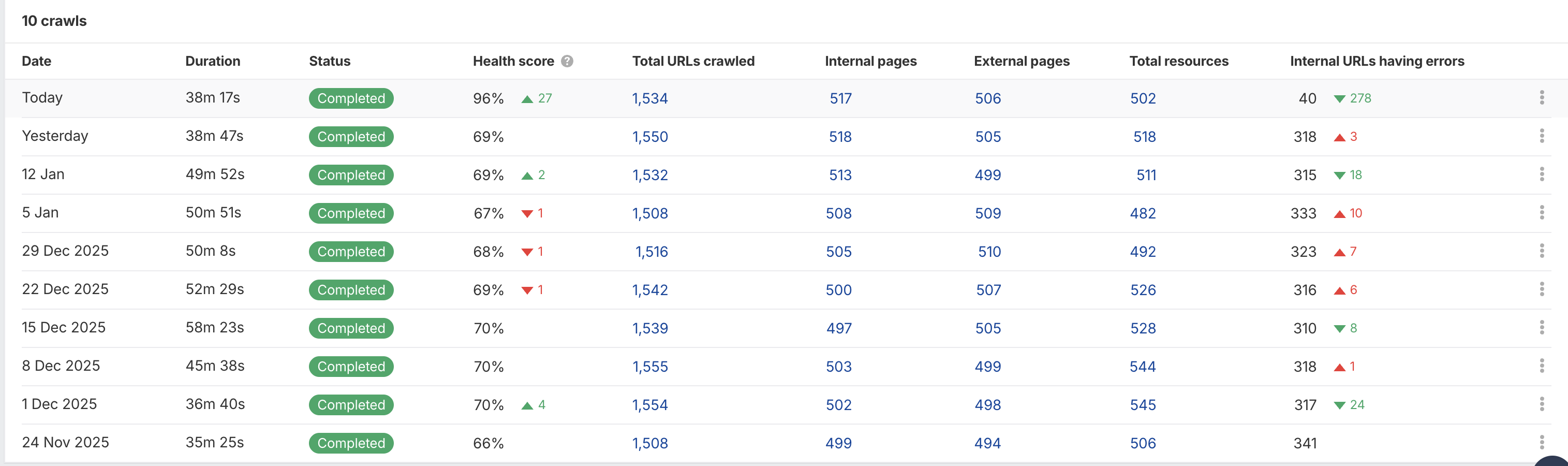
Starting October 23 I tracked the awards question every day across 5 AI platforms with Report Visibility. Through November 2, Base Hit Marketing was named in 40 of 55 answers. Perplexity's tone changed: on November 2 it called my award one of "the clearest locally specific awards" in Lynchburg, next to a reader-voted magazine award. Google AI Mode named it almost every day, and its only source was the Des Moines Register press release page. These answers cite copies of the award release.
I also asked "Is the Consumer Ratings Institute a legitimate award?" Every engine called it a marketing credential rather than an independently judged honor. They still listed it when asked which Lynchburg agencies have won awards.
The trophy
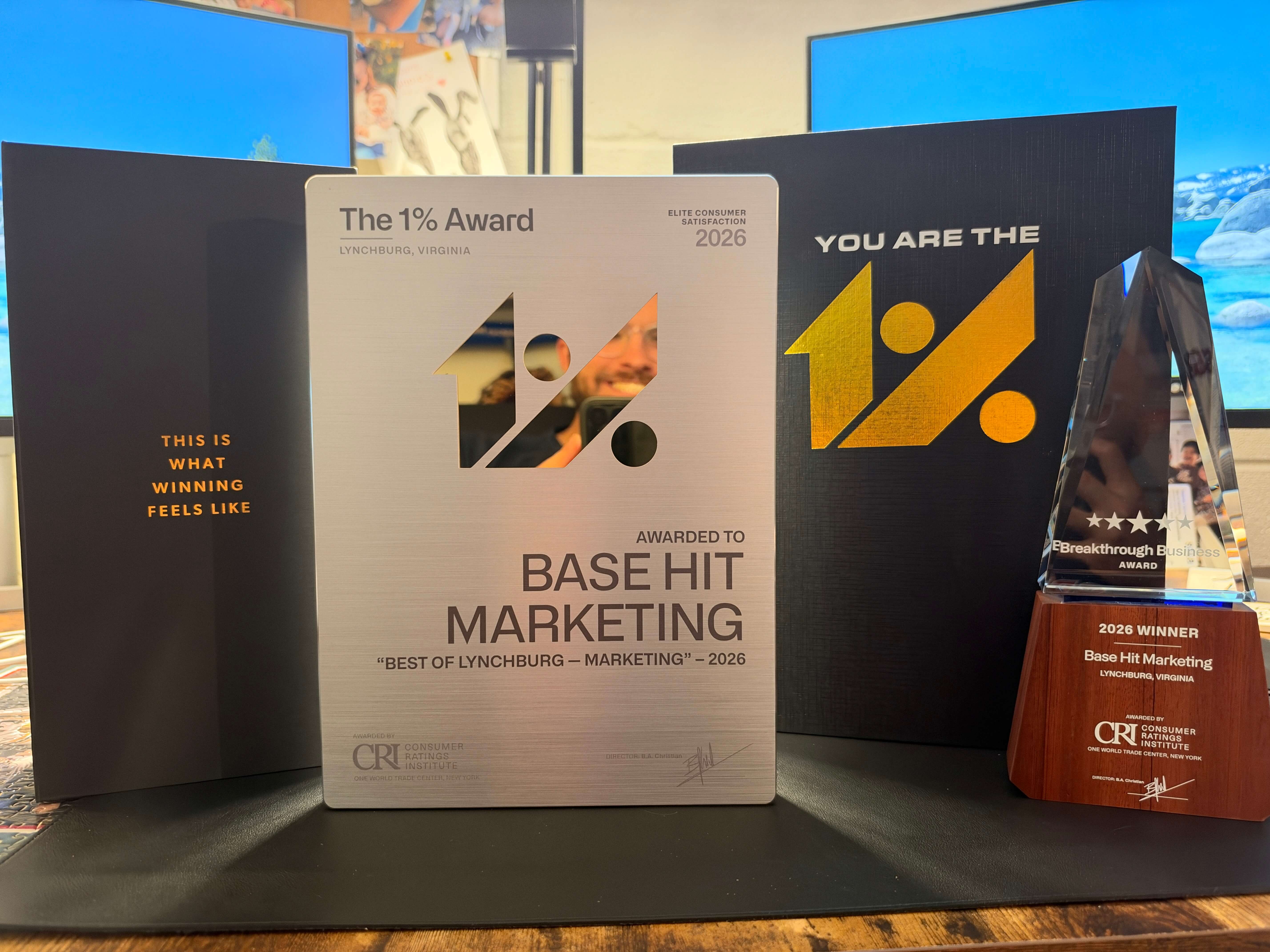
The box arrived October 25. I bought one award, but the items carry different names: "The 1% Award," a "Breakthrough Business Award" and "Best of Lynchburg, Marketing." They're signed by a "Director" and give the Consumer Ratings Institute's address as One World Trade Center, New York. None of them mention criteria or a review count.
What my site shows
I compared the week before the release (October 9 to 15) with the week after (October 16 to 22), using Search Console and GA4.
- Google clicks: 2 before, 8 after
- Clicks on my brand name: 1 before, 4 after
- Sessions: 39 before, 63 after
- Form fills and calls: 0 before, 0 after
The release pages sent 6 visits to my site: 5 from einpresswire.com and 1 from einnews.com. Nobody filled out a form or called.
SE Ranking picked up 8 real backlinks from the release, all nofollow, on syndication sites like thevirginiatribune.com and richmonddailyreporter.com. It also found about 240 links from auto-generated "website traffic checker" pages, which have no real value. None of the newspaper copies show up in the link data so far.
These are small numbers over one week, and some of the direct traffic is probably me checking my own site. After October 22 my second press release was live, so later site data mixes the two. I'll cover the combined results in the final part.
Disclosures
Report Visibility is my own tool, a DBA of Base Hit Marketing. Any award images in this post are shown as evidence of what the package includes, not as trust signals.
Next: Part Two
The day after I bought the award, I bought a $498 "AP + USA Today" press release package from a different vendor. It went live on October 23. Part Two covers what it did.
What I want you to do next:
If one of these award emails just landed in your inbox and you're wondering whether to pay, schedule a call with me. I'll tell you what I've seen.